
Settings That Secretly Drain Your Phone’s Performance Every Day
settings that drain phone performance: a clear guide to hidden system options that slow your phone down and how to fix them safely
Most people blame slow phones on age, storage, or bad hardware. But in reality, some of the biggest performance problems come from settings that quietly run every single day in the background. These settings don’t look dangerous. Many are enabled by default. And most users never realize how much performance they drain over time.
Understanding settings that drain phone performance is one of the most effective ways to make your phone feel faster without installing apps, deleting data, or upgrading hardware. Small configuration changes can reduce background load, free up memory, stabilize battery usage, and improve responsiveness across the entire system.
This guide explains which settings are responsible, why they slow your phone down, and how to adjust them safely on both Android and iPhone.
Why Settings Matter More Than Apps
Apps get most of the blame when phones feel slow, but settings control how those apps behave. A single enabled setting can allow dozens of apps to refresh, sync, track location, or animate continuously.
Settings decide:
how often apps wake up
how much data they sync
how aggressively animations run
how many system services stay active
how often your phone checks for updates
When too many of these are active at once, performance suffers. This is a major reason settings that drain phone performance are so overlooked.
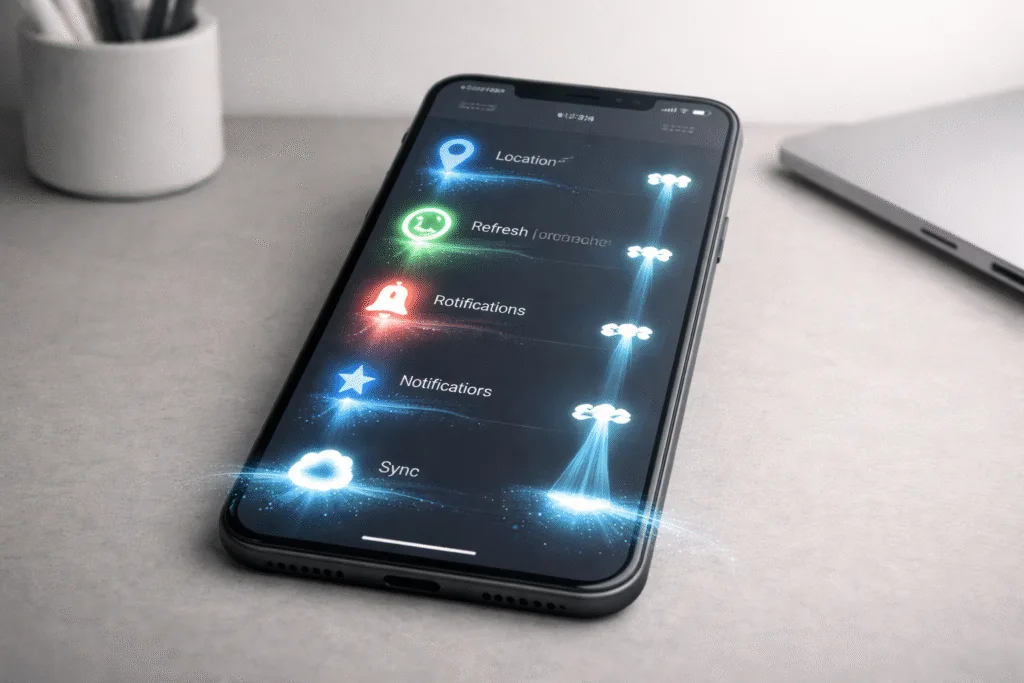
Background App Refresh Is Always Working Against You
Background app refresh allows apps to update content even when you’re not using them. While convenient, it constantly consumes memory, CPU, and battery.
Social media, news, shopping, and email apps are the biggest offenders. Each refresh forces the system to pause other tasks.
How to fix it:
disable background refresh for non-essential apps
keep it enabled only for apps you truly rely on
prefer manual refresh instead of automatic
Reducing background refresh alone can noticeably improve phone speed.
Location Services Are Often Overused
Location access doesn’t just turn on when you open maps. Many apps request location access “all the time,” meaning they track your movement in the background.
This causes:
constant sensor usage
frequent data processing
battery drain
performance throttling
Location tracking is one of the most powerful settings that drain phone performance.
How to fix it:
set location access to “while using the app”
disable location for apps that don’t need it
turn off system-wide location history if unused
Your phone becomes calmer immediately.
Push Notifications Trigger Hidden Activity
Every push notification wakes your phone, activates background processes, and refreshes app data. If you receive dozens per day, your phone is constantly working.
This drains performance even when the screen is off.
How to fix it:
disable notifications for non-essential apps
group notifications by priority
turn off background notifications for games and shopping apps
Fewer notifications mean fewer performance interruptions.
Always-On Syncing Keeps the System Busy
Email, cloud storage, photos, calendars, notes, and messaging apps often sync continuously. While syncing is useful, real-time syncing for everything is unnecessary.
Continuous syncing:
keeps background services active
uses memory constantly
increases heat
reduces responsiveness
How to fix it:
change sync frequency to manual or scheduled
disable syncing for unused accounts
limit photo backups to Wi-Fi only
This reduces constant system load and improves stability.
System Animations Look Nice but Cost Performance
Animations are everywhere: app launches, transitions, gestures, and menus. On newer devices they feel smooth, but on mid-range or older phones they consume processing power.
Heavy animations are subtle settings that drain phone performance because they don’t look harmful.
How to fix it:
reduce motion settings
disable unnecessary transitions
use simplified system animations
Phones often feel faster immediately after this change.
Live Wallpapers and Widgets Are Always Active
Live wallpapers and interactive widgets update constantly. Weather widgets, animated clocks, and live backgrounds run even when you’re not interacting with them.
This background activity uses:
CPU cycles
RAM
battery power
How to fix it:
switch to a static wallpaper
remove unused widgets
keep only essential widgets active
Minimal home screens perform better.
Auto-Update Settings Can Slow Things Down
Automatic updates for apps and the system often run in the background while you’re using your phone. This can cause temporary slowdowns, stutters, or overheating.
How to fix it:
schedule updates for overnight
disable auto-updates on mobile data
update apps manually when convenient
Controlled updates prevent performance drops during active use.
Bluetooth and Wi-Fi Scanning Stay Active
Even when you’re not connected, your phone may continuously scan for Wi-Fi networks and Bluetooth devices.
This constant scanning drains resources and battery.
How to fix it:
turn off Wi-Fi scanning when not needed
disable Bluetooth when unused
turn off nearby device discovery features
Reducing scanning improves idle performance.
Digital Assistants and Voice Detection Run Constantly
Voice assistants often listen in the background for wake words. This requires constant microphone monitoring and background processing.
While subtle, this is one of the persistent settings that drain phone performance.
How to fix it:
disable always-on listening
limit assistant access to manual activation
turn off unused voice features
Your phone becomes quieter internally.
Analytics, Diagnostics, and Usage Tracking
Many systems collect usage data, diagnostics, and analytics by default. While useful for developers, they continuously run background tasks.
How to fix it:
disable sharing analytics
turn off system diagnostics reporting
limit app usage tracking permissions
This reduces unnecessary background processing.
Battery Optimization Settings Can Backfire
Ironically, some aggressive battery-saving modes constantly manage apps in the background, causing performance hiccups.
Switching between active and restricted states repeatedly can create lag.
How to fix it:
use balanced battery mode
avoid extreme power-saving modes unless necessary
allow essential apps to run normally
Balanced settings provide smoother performance.
A Simple Performance-Focused Settings Reset
Follow this order for best results:
disable background refresh for non-essential apps
limit location access
reduce notifications
simplify animations
remove live widgets
control syncing behavior
This addresses the most impactful settings that drain phone performance.
Weekly Maintenance Habits That Protect Performance
Restart your phone once per week
Review app permissions monthly
Check notification settings regularly
Keep home screen minimal
Monitor battery health
These habits prevent slowdowns before they start.
When Settings Alone Are Not Enough
If your phone is very old, overheats constantly, or struggles after major system updates, hardware limitations may be the real cause. Settings optimization still helps, but expectations should remain realistic.
Final Thoughts
Performance problems don’t always come from apps or storage. Many slowdowns are caused by hidden options running silently every day. Understanding settings that drain phone performance gives you control over your device again.
By disabling unnecessary background activity, limiting permissions, and simplifying system behavior, you can dramatically improve responsiveness without spending money or risking data loss.
Your phone doesn’t need more power.
It needs fewer hidden drains.

Dr. Ethan Marlowe is a science communicator specializing in human biology, neuroscience, and the hidden mechanisms of the body. He focuses on transforming complex research into clear, engaging explanations that help readers understand how their bodies work. At The Human Body Facts, Ethan brings curiosity, accuracy, and a modern scientific approach to every article.