
The 30 second breath hold test reveals how efficiently your body manages oxygen and carbon dioxide during short periods of breath restriction.
Breathing feels automatic, yet it is tightly regulated by complex chemical sensors and neural feedback loops.
Even a short breath hold exposes how your lungs, blood chemistry, nervous system, and diaphragm coordinate under mild stress.
Small differences in tolerance reflect hydration, fitness level, sleep quality, anxiety, and respiratory efficiency.
This experiment provides immediate insight into how well your body maintains internal balance when airflow is temporarily reduced.
What the 30 Second Breath Hold Test Measures
The 30 second breath hold test evaluates respiratory control and blood gas regulation.
Your body constantly balances two critical gases:
- Oxygen, which fuels cellular metabolism
- Carbon dioxide, which regulates blood pH and breathing drive
Contrary to popular belief, the urge to breathe is driven more by rising carbon dioxide than falling oxygen.
Specialized chemoreceptors in the brainstem and carotid arteries monitor these levels continuously.
When carbon dioxide increases, the nervous system triggers breathing reflexes.
This test exposes how sensitive and efficient that regulatory system is.
How Breathing Is Controlled by the Nervous System
Breathing is governed by automatic neural centers located in the medulla and pons.
These centers receive input from:
- Blood chemistry sensors
- Lung stretch receptors
- Chest wall mechanoreceptors
- Emotional centers in the brain
When you hold your breath, carbon dioxide accumulates in the bloodstream.
Blood acidity increases slightly.
Chemoreceptors detect this shift and stimulate respiratory muscles.
The diaphragm and intercostal muscles prepare to contract.
This creates the familiar urge to breathe.
Your tolerance reflects how well your nervous system manages this feedback loop.
How to Perform the 30 Second Breath Hold Test
Accuracy requires calm execution and consistency.
Setup
Sit comfortably in a relaxed posture.
Avoid performing immediately after heavy exercise or meals.
Take several slow natural breaths.
Have a timer ready.
Execution
Inhale normally.
Exhale gently.
Hold your breath after the exhale.
Start the timer.
Remain relaxed and avoid tensing muscles.
After thirty seconds, resume breathing slowly.
Observe physical sensations and recovery time.
Repeat once after a short rest.
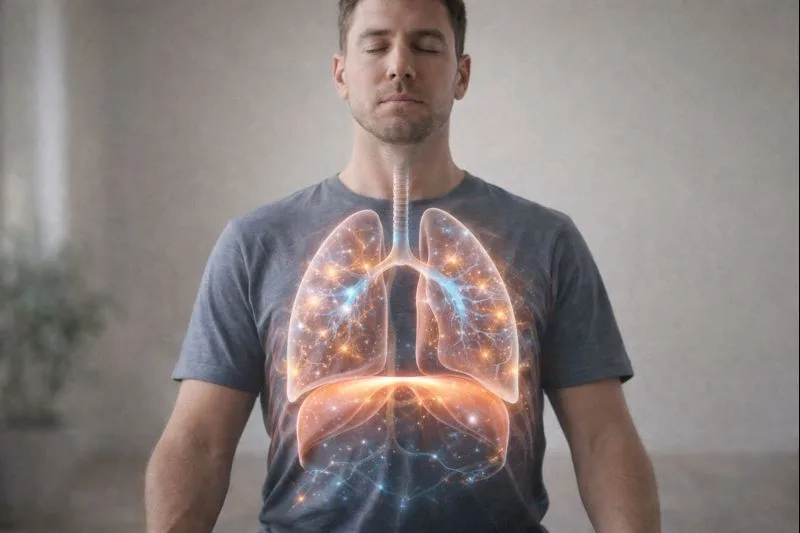
What Your Results Indicate
Breath hold tolerance varies widely between individuals.
Training, lifestyle, and physiology strongly influence performance.
Comfortable Completion
If you complete thirty seconds without discomfort:
- Your respiratory control is efficient
- Carbon dioxide tolerance is balanced
- Nervous system regulation is stable
- Diaphragmatic function is strong
This often appears in physically active individuals and those practicing controlled breathing.
Mild Discomfort
Mild chest pressure or breathing urge is normal.
It reflects healthy chemoreceptor sensitivity.
The body is correctly signaling the need to breathe.
Strong Discomfort
Early discomfort may result from:
- Anxiety
- Shallow breathing habits
- Poor posture
- Low fitness level
- Dehydration
- Sleep deprivation
This does not indicate disease but suggests room for respiratory conditioning.
The Role of Carbon Dioxide Tolerance
Carbon dioxide tolerance influences breathing efficiency more than oxygen levels.
High sensitivity triggers rapid breathing even when oxygen is sufficient.
Low tolerance can create unnecessary breathlessness and anxiety sensations.
Training gradually increases tolerance by improving chemoreceptor calibration and nervous system stability.
Breath control exercises enhance this adaptation.
Physiological Effects During Breath Holding
Several physiological changes occur within seconds:
- Blood carbon dioxide increases
- Blood pH decreases slightly
- Heart rate may fluctuate
- Diaphragm tension rises
- Chest pressure increases
- Nervous system alertness increases
These responses are protective and reversible.
They demonstrate how tightly the body regulates internal chemistry.
Factors That Affect Your 30 Second Breath Hold Test
Multiple variables influence breath tolerance.
Hydration
Proper hydration supports optimal blood chemistry regulation.
Dehydration increases respiratory discomfort.
Posture
Slouched posture restricts diaphragm movement.
Upright posture improves lung expansion and control.
Anxiety Levels
Stress activates sympathetic nervous activity.
This reduces breath tolerance and increases urgency.
Physical Conditioning
Aerobic fitness improves oxygen utilization and carbon dioxide handling.
Sleep Quality
Sleep deprivation destabilizes autonomic regulation.
Breath control becomes less efficient.
Can Breath Tolerance Be Improved
Yes. Respiratory control adapts through gradual training.
Effective strategies include:
- Slow nasal breathing
- Diaphragmatic breathing exercises
- Short controlled breath holds
- Postural correction
- Aerobic conditioning
Consistency improves nervous system regulation and respiratory efficiency.
Small improvements accumulate over weeks.
Safety Considerations
Never perform breath holds underwater or while standing.
Avoid hyperventilating before the test.
Stop immediately if dizziness occurs.
This experiment is not intended for medical diagnosis.
Persistent breathing difficulties require professional evaluation.
Why Short Respiratory Experiments Increase Body Awareness
Breathing links directly to autonomic nervous regulation.
Short experiments reveal stress patterns and posture habits.
They improve self-regulation and respiratory efficiency.
They promote mindful awareness of internal physiology.
They translate invisible biological processes into measurable experience.
Next Recommended Experiment
Continue with:
“Cold Spoon Skin Test: How Fast Does Your Nervous System Detect Temperature?”
This experiment explores thermal receptors and sensory nerve conduction speed.

Dr. Ethan Marlowe is a science communicator specializing in human biology, neuroscience, and the hidden mechanisms of the body. He focuses on transforming complex research into clear, engaging explanations that help readers understand how their bodies work. At The Human Body Facts, Ethan brings curiosity, accuracy, and a modern scientific approach to every article.